
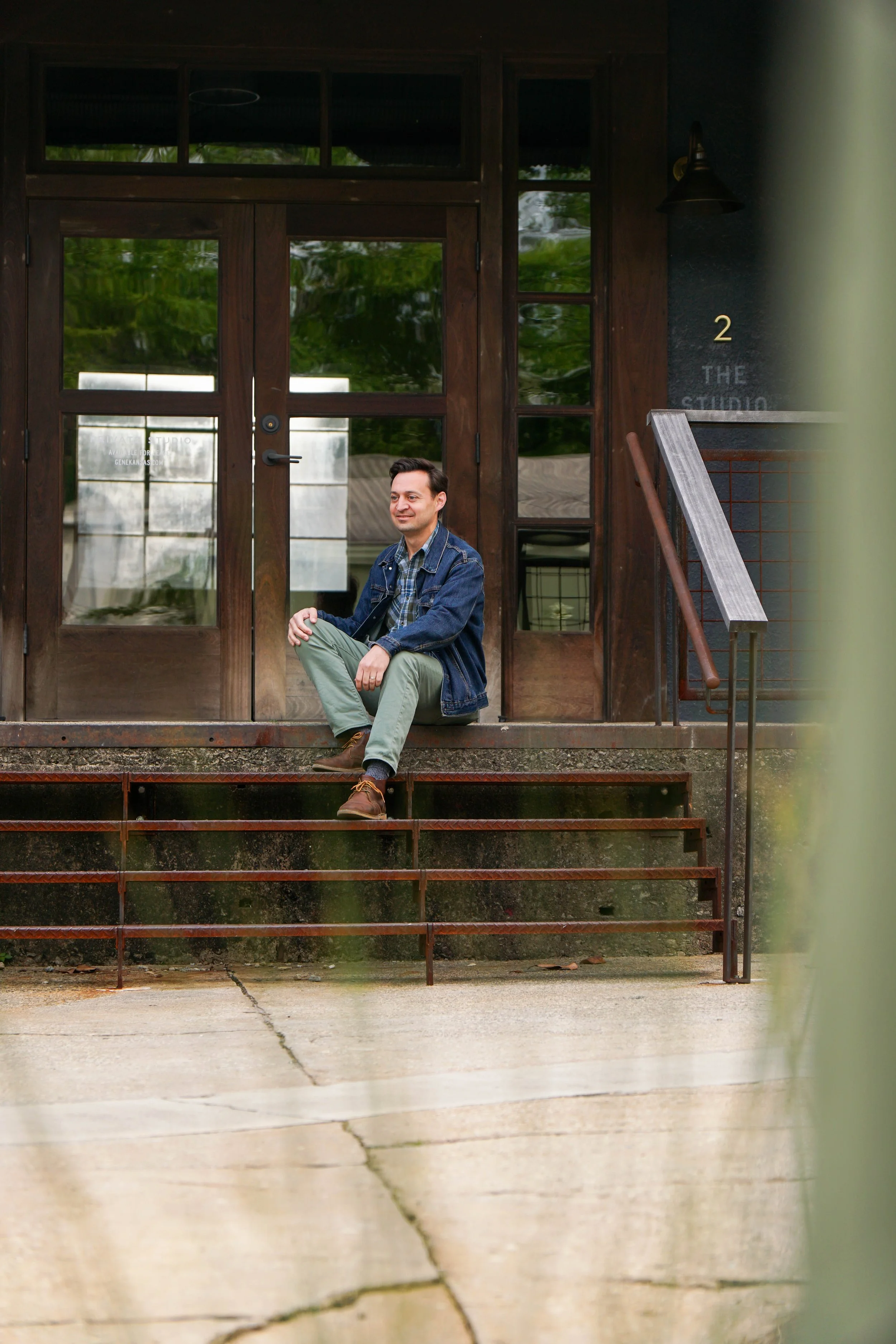
Ted Bradford
Navigator of Cities
Some people find their calling. Ted Bradford followed his — through a graduate program, a neighborhood planning meeting, a $20,000 pay cut, and eventually, the skyline of Atlanta itself.
If you've spent any time with Ted, you know what happens when the conversation turns to cities. His eyes light up. His sentences quicken. He doesn't just talk about the polis — he's spent his entire adult life inside it, learning how it works, where it breaks down, and how to make it better.
That journey started in Maryland, where Ted grew up watching a generation of ambitious young people aim straight for Washington. He aimed south. Atlanta offered jobs, affordability, and social opportunity. So, he loaded everything into a Chevy Lumina, drove down with a buddy, and convinced a landlord — charmed by two young men who looked like "nice boys" — to waive the first month's rent. No jobs. No money. Just a belief that this was the right direction.
By Gene Kansas & Trevor Williams
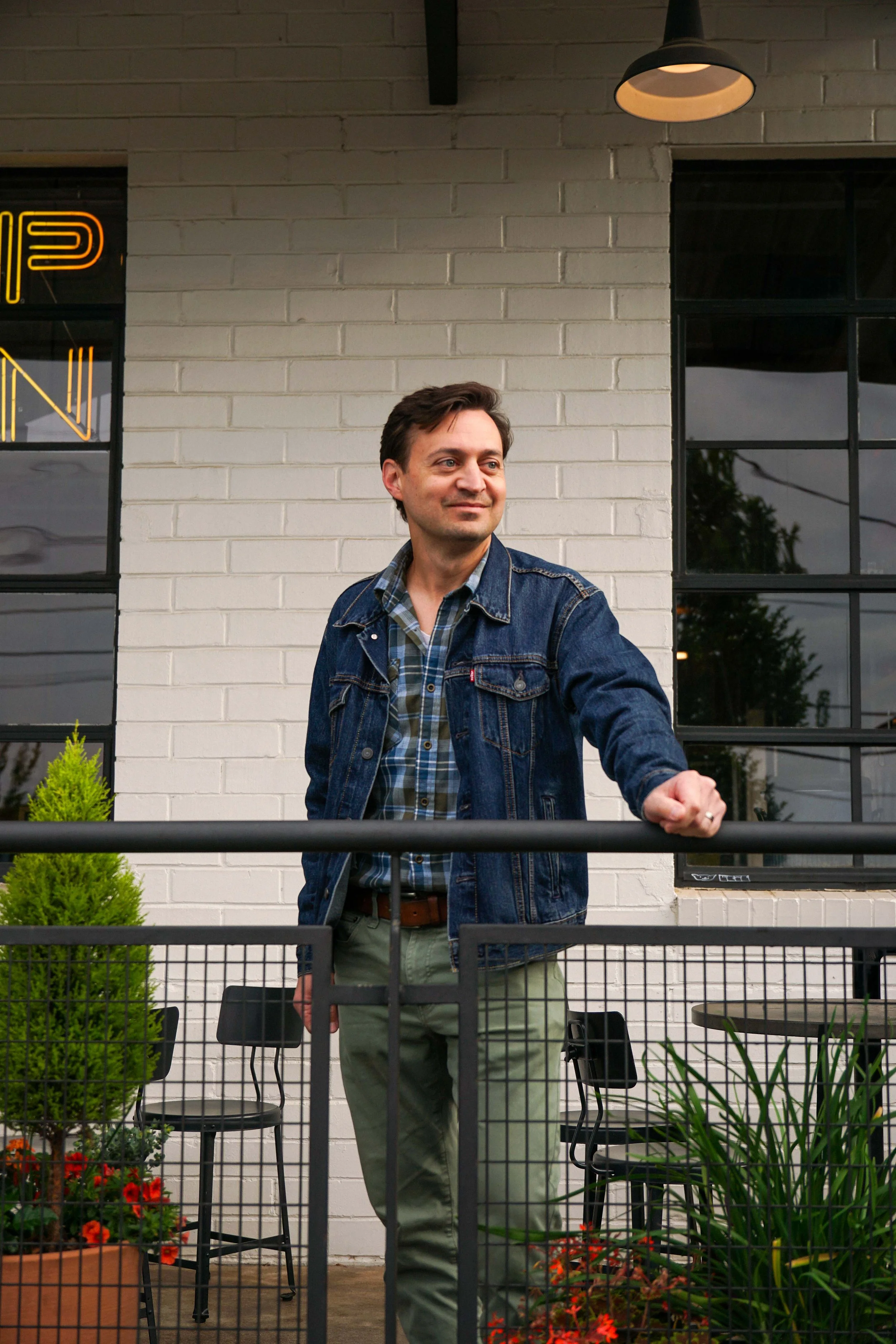
City As A Classroom
His mother, ever hopeful, offered to fund a graduate degree. Ted landed at Georgia State University, earning a master's in urban policy studies and developing a mindset that would quietly shape everything that followed. But the "real education" came from showing up to a Neighborhood Planning Unit meeting in East Atlanta — and then never really leaving. By 24, he was public safety chair. Not long after, vice president. And while he loved his role, Ted dreamed of a more active future.
When District 5 Councilwoman Natalie Archibong texted him in the final stretch of a campaign that was far from certain, Ted didn't hesitate.
"I took a $20,000 pay cut and went to work for the council member in the middle of an election that she was like, 'I might lose.' I was like, 'No, I'm in. This is the path.'"
He rose to chief of staff. And what he learned in those four years was clarifying: the machinery of city government, as complex as it appears from the outside, is ultimately "just a bunch of individuals showing up in an office building every day and doing their job." Change, when it came, came slowly — incremental, negotiated, hedged. Ted respected the people who embraced that route to impact. He just knew it wasn't his.
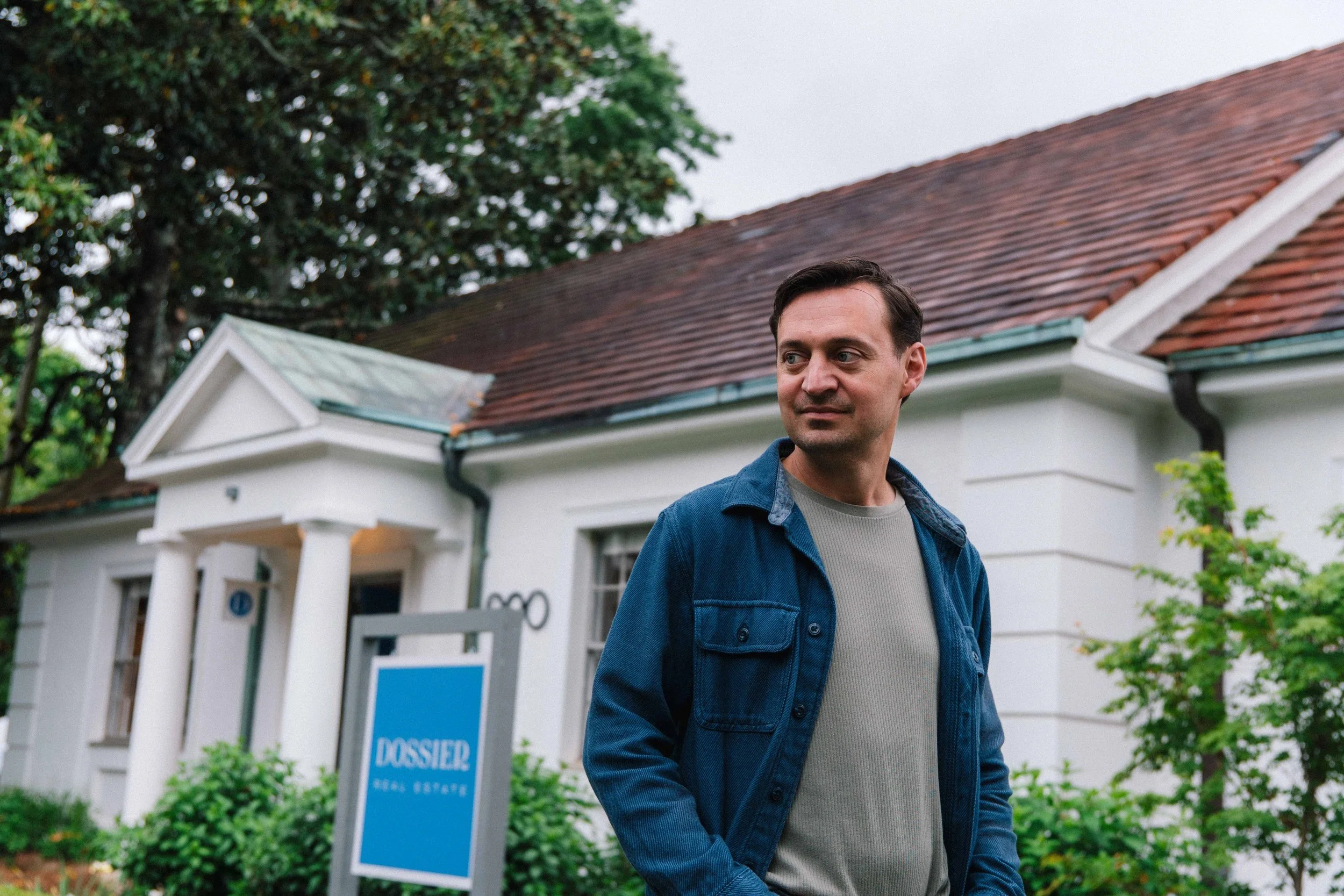
Building the City from the Inside Out
What Ted wanted was speed — not recklessness, but the kind of tangible, visible progress that a career in the private realm can deliver, and that real estate could provide. He set his sights on development, imagined starting with a duplex, and built a snowball theory of impact from there.
Instead, he found something better: a partnership with Gene Kansas | Commercial Real Estate, and a front-row seat to what brokerage representation really means. Along the way came the opportunity to help create Constellations — a civic and socially based shared workspace and our home in the historic Southern Schoolbook Building on Auburn Avenue — and with it, a realization that connecting people and places could be just as transformative as building them.
"You're part of the behind-the-scenes culture building of the city of Atlanta."
Of course, being behind the scenes doesn't necessarily mean your work is hidden. A preeminent example in Bradford's career is helping lead a team representing Rockefeller Group to identify the Midtown site now home to what will be Atlanta's tallest building in decades.
"Every time I see an article about that building, I'm like, 'I found that site.' That was brokerage. That was fun. It has a literally enormous impact on the skyline of the City of Atlanta, and I had a role in that."
The Ultimate Platform
Ted Bradford is a practitioner who reads Henry George and teaches himself GIS mapping. He sees a widening gap between economists debating land policy in the abstract and the people actually doing deals on the ground — and he intends to close it.
"Because this conversation is happening right now, I think there's a really good opportunity to weigh in."
But his ultimate ambition isn't a bigger title or a larger platform. It's a front porch — literal and proverbial — a place to sit with the next generation of city-builders and share what he's learned from the grassroots, the council chambers, the coffee shop, the deal table, and the street.
That's what I've always admired most about Ted. He followed his own path — unconventional, uncharted, and entirely his own — not so he could arrive somewhere, but so he could turn around and help others find theirs. That's the spirit we try to bring to everything we do at Gene Kansas | Commercial Real Estate. And it starts with leaders like him.